Thursday, 11 December 2014

Saturday 6th December - Film Crit

I enjoyed this lesson a great deal for a variety of reasons; firstly, watching the other groups' films was very interesting. Each group took the project in a very different direction: Leroy's group used their knowledge of urban life and conflict to create a down-ending piece in keeping with British realism, Sylwia directed a metaphorical piece on the negative effects of aggression on your social circle, while our group decided to tackle social issues close to members of the group. Each film was unique and engaging, and while none were free of problems they each certainly held up under their own merit.

Our film was generally well-received, and was praised for the acting and storytelling. I was particularly pleased with the reception of the story concept, having worked most in-depth on that front. Criticism fell mainly in two areas; technical issues, of which we had many during filming, some being preventable while others being totally unforeseen, and clarity of filming, some of which can be put down to incomplete planning. Had we thought more closely about some of the rules of film (such as the 30 degree rule and never cutting while filming) while storyboarding and shot planning the issues with imperfect cuts might not have happened. We were also told to think further about story clarity using dialogue - we had initially decided to provide more visual context, but that had to be cut due to length constraints. Using dialogue for this might have alleviated some of the confusion for the audience. Speaking as a group in a crit was a new experience, and while I found it illuminating to hear my colleagues explain some of the decisions made and problems encountered while shooting it meant that not everybody got to speak their mind, due to time constraints. 

Looking at the design group's fashion project and the prototype clothing was a fascinating eye-opener into the world of fashion development, a subject I have very little experience with. Each person approached the design process from their own angle, varying from conceptual, expressive work, to meticulously planned and crafted ideas, to work based on experience in other media pathways. The huge variety of interests and concepts explored mirrored the diversity of our films, and it was refreshing and exciting to encounter so many new points of view. I particularly enjoyed Alberto and Mohammed's pieces; the former for its ambition and thought-out meaning, and the latter for its inventiveness in drawing from other media which is normally separated fully from fashion.

Tuesday 2nd - Thursday 4th December - Film Editing and Post Production

The penultimate two lessons were devoted to taking the raw footage filmed on Tuesday and refining and condensing it into a successful minute-long film. Joey took it upon himself to do the physical video editing, since he had most experience using similar software, and Seb and I sat alongside him assisting with ideas and suggestions regarding the cuts used and how to make them look as good as possible. I was very new to the experience of editing video, but learnt a lot; there were a couple of harsh reminders of the 30 degree rule within the footage, and some shots that worked better by being cut down or extended more dramatically than seemed plausible. In particular, the opening shot of the magazines on the bed was found to be best when extended, since it gave the audience time to process not only what they were but that they were clearly important. Once that was done, Becky took over to colour correct the film, and while I was initially going to be editing and adding the sound, the recording process had encountered technical errors and the camera-recorded volume was used instead, which didn't require any in-depth editing. 

During this editing process I watched several short films from filminute.com, which is an annual competition for short films no longer than a minute in duration. The overlap with our brief meant that, despite limited thematic connections to our work, many of the films were useful to look at from a technical perspective. I observed where, when and how cuts were made and what effects they produced; long, uncut sequences let the eye wander and begin focusing on the constants in a scene, whereas shorter closeups and cuts increase the pace and tension in a scene. This was useful to feed back into the editing process and help ensure that the film came out as close to our vision as possible.

A still from Grandpa, winner of the People's Choice award at filminute. The centering on the old man clearly shows that he is the focus of the shot, but the fairly long shot, natural lighting and lack of drama show this to be a friendly, low-tension shot.

I also used this time to help another group with their project as an actor, as many class members were unwilling to be in a film. The experience of being directed and following a shot plan was streamlining, but not restrictive - there was room enough in the direction for me to improvise somewhat, and I was glad of the opportunity to do so.

Wednesday, 10 December 2014

Saturday 29th November - Monday 1st December - Film Story Building

This lesson proved pivotal in shaping our film's story, as we showed our plan to Seb and made what we thought were final preparations before filming. Seb liked our concept and moral premise, but also remarked that our story wasn't 'high-concept', in that it didn't exactly create a situation that would be unexpected to a viewer. To remedy this, he suggested that we look at the film from the point of view of a female-to-male transgender person, as issues with trans- and homophobia are often dealt with solely from a male point of view, thanks in part to the stereotypical 'macho culture' objections to such things. Looking at these issues from the point of view of a woman, wishing to be male and struggling to find an accepting social group, is something not addressed often in media and was our chance to make something unique and original.

Sean Penn in Milk, a film documenting the life, work and death of Harvey Milk, the first openly gay person to be elected to a major political position. While the film is candid and respectful in its treatment of homosexuality, for which it should rightly be praised, a predominantly male main cast fails to break away from Hollywood's standard white male leading roles (albeit in this case historical reasons somewhat justify it).

We went back to the drawing board, and during the rest of that lesson and the next Monday our group worked on recreating our obstacle grid, before creating a full storyboard and shot plan detailing the progression of events and how we would structure and record each shot. We decided to have the scene take place at the protagonist's house, having friends arrive early and force a confrontation during which the reveal that the main character was trans would take place. Planning went quite well, I thought, and though I was not able to be present during filming due to prior work commitments I felt confident that the group would be able to record good footage based on our strong planning, and looked forward to seeing the results.

Tuesday 25th - Thursday 27th November - Film Storybuilding

These two lessons were focused on story building, and how to create a successful film from a moral premise that shows your view on how life should be lived. The brief was to create a one-minute 'chase sequence', which was very loosely defined; more importance was placed on story development and meaning than what constituted the nature of a chase in the film. 

After looking at what the basics of a film story are, and how important the story is to the film, we began exploring the concept of moral premises and why they are useful in generating a meaningful film. We were shown some examples, including 'Ruthless ambition leads to community breakdown', which is the basic premise to Kramer vs. Kramer, and then asked to come up with some moral premises ourselves which could be turned into a story. I enjoyed this new approach to storybuilding, as it creates a strong starting point for a story based not on a character or story world, but an ethical issue for the story world to be created upon and for the characters to be metaphors for the various pro- and con- arguments relating to the moral premise at hand.

A still from Kramer vs Kramer, in which Dustin Hoffman's character invests all his time in pursuing his career and ends up neglecting his family, and is forced to learn to be a good parent when his wife leaves him. By expanding on a very simple moral premise, not only is a good, enjoyable story told but the writer's views on family and work come through very strongly.

Using the hero as a vehicle for an author's argument is very common practice in writing, but we learnt in class that there are other, more nuanced ways of using characters to tell a story and express a point. By adapting the ancient debating technique known as dialectic, an author can begin a story giving the hero one extreme point of view, the villain another, and having the hero come to realise the important middleground between those arguments, the format of thesis > antithesis > synthesis is used to not only develop a character as the story progresses but to develop an argument alongside that character. Supporting characters provide new arguments, counterarguments and points of view throughout the story, fleshing out the process of arriving at a good moral premise. Though I knew about dialectic as a process, having studied philosophy before, I had never considered its application in creative writing and am glad to have learnt such a different way of reusing this technique.

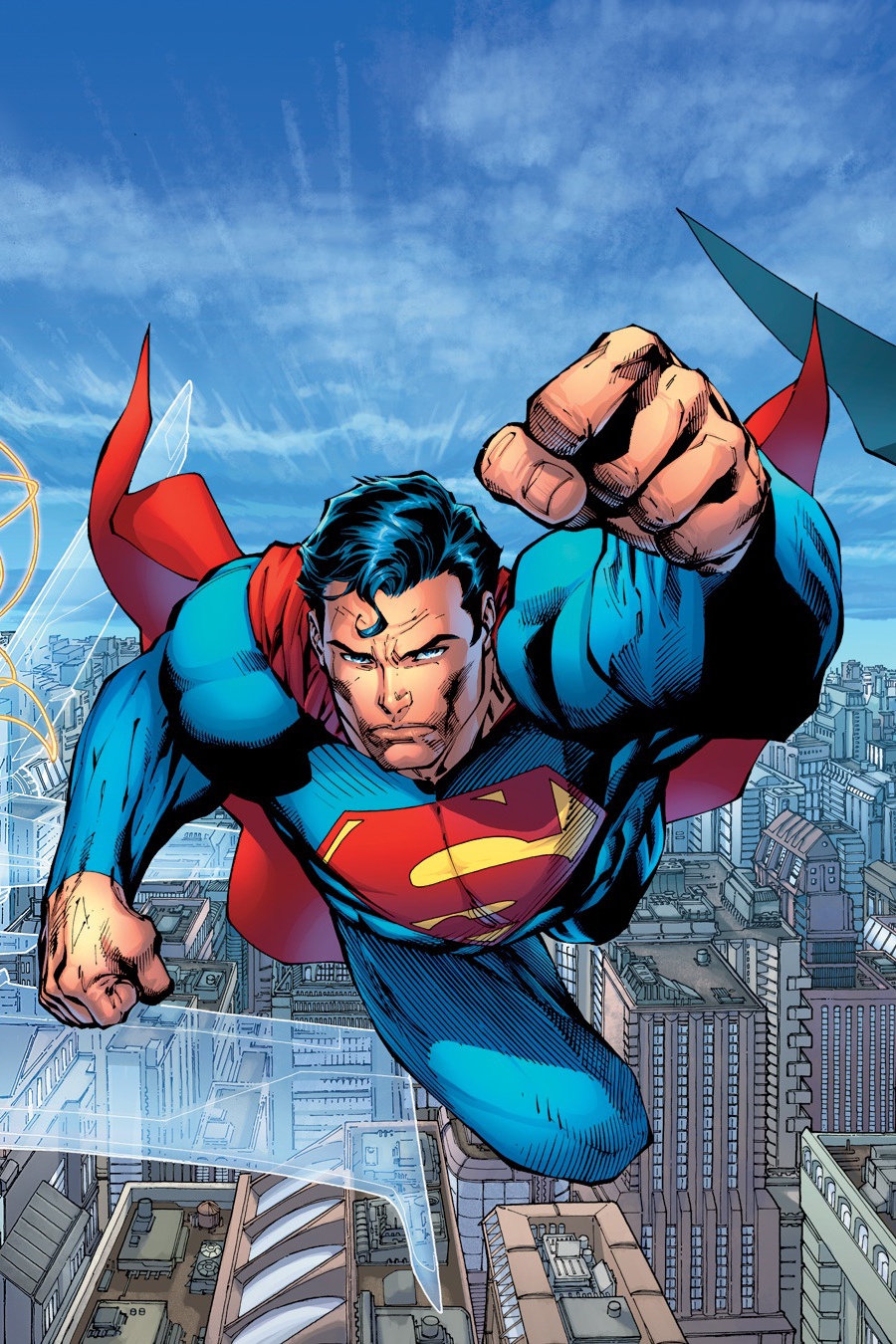
Superman, a hero with very clean cut moral objectives, standing for "Truth, Justice and the American Way." Although writers more recently have expanded on and developed his personality, his core concept remains central to the plot of most of his films and comics. Though he is not a good example of a hero as part of dialectic, since his ideals are rarely meaningfully challenged, he represents a powerful storytelling device that has survived for decades in popular culture.

Next, we began individually coming up with ideas, before sharing them in a group to be filmed and edited at a later date. Bearing in mind the concept of the chase, and a passing comment by Seb about the overuse of straight, white males as protagonists, I came up with the idea of a story in which a transgender woman (male to female) has bought a dress and has to conceal it from his friends, while they 'chase' him to discover what he's hiding, and after finding out leave him with just one good friend left. The moral premise here is that being open about yourself leads to discovering true friendship. I suggested this to the group, and after some discussion it was accepted as the story we would work with. We began planning a structure during the lesson, based on the idea of escalating, naturally forming obstacles, and created what we thought was a good foundation to plan a film with. I enjoyed this process of group collaboration and idea sharing, and while my ideas ended up being used first and foremost it was good to be challenged by my classmates, as their input helped both solidify my ideas and added some new ones.

Saturday 22nd November - Sound Design Crit

Disaster struck early, before the crit this Saturday, when my Audition file corrupted while I was backing it up, which meant that I had to rush to recreate it as best I could during the time before the crit. A fortunate combination of good organisation of sound files on my part and the late start due to some students arriving late meant that thankfully I was able to finish the project again successfully, though a little of the nuance of the editing of the final sound was lost, as I had to time to find the exact echo and pitchdown settings I had used. However, I was happy enough with my new sound file to present it for the crit, and was fairly pleased with its overall reception. People liked how I built atmosphere using a small number of effects fading in and out with each other, then building in volume before a sudden cut. It was suggested that I spent more time on the final sound, as the bubble sound I had used had a fairly comedic feel to it that was not intended at all. This crit was very useful to me in that regard; I was happy with the mix of criticism and praise I received and took away some useful information.

Other work that stood out to me was Joey's alternative action scene, from the Digimon movie. I felt he did a great job of replacing the cheesy, generic music used in the original film with a genuine atmosphere of tension and threat, despite his project not being fully finished by the time the crit came around. I also enjoyed some of the design students' work a lot, such as Alberto's bow tie, which was inspired by the celebrity desire for recognition and bespoke, unique accessories. Not only did I like his product design and his prototype, but I also thought he took a risk in terms of attempting to market his product both to the rich elite and the more common consumer, who would be able to purchase off-the-shelf standardised versions of his designs.

Thursday 20th - Friday 21st November - Sound Design contd.

During this time period I recorded some of the sounds I used for my sound piece, such as some water splashing and the wind blowing strongly in the park close to where I live. I then used freesound.org to pick up some sound effects that I could not realistically record with any clarity, such as the sound of the sea and a clear, neat recording of a group of people laughing. Once I had consolidated all of the files I would be using into one project folder, I began working on creating a narrative. Having storyboarded my piece prior to this I felt confident that I had everything I needed, and very few pitfalls actually raised their heads during my work. My only main issue was effectively forming a climax; I could not find a way of making the volume of the wind loud enough to be as oppressive and haunting as I had wanted, and the sound I ended up using to represent the character's last breath was primitive at best. While searching for some ways of ensuring my tense atmosphere came across throughout the rest of my piece, I looked at some horror films to see how they used sound to do the same thing.

The Others, directed by Alejandro AmenĂ¡bar. The film focuses very strongly on portraying isolation, using the weather to great effect and also making use of silence as a method of building tension. I decided to leave some silence before my character's climactic gasp to allow for further built-up tension.

Tuesday 18th November - Sound Design contd.

This lesson ended up being a pivotal lesson for my project, and as part of my career at Ravensbourne as a whole. Having begun working on my jungle sound journey, I took a step back and realised that I hadn't thought much at all about what the piece meant; I had fallen into the same place that I had with photography, where I was making something engaging on a surface level but no deeper than that. I decided to talk to Seb about it, and together we identified that fear was the central theme to my piece, but that my current idea did a poor job of representing how I felt about fear. I began storyboarding things that scared me, both in terms of real-life things and abstract concepts, and settled upon the ideas of loneliness, powerlessness and loss of friendship as themes that were important to me. I decided initially to use a shark attack to represent these emotions, as I am scared of sharks to some degree, but further thought showed me that this was too divorced from most people's idea of fear to have any real, visceral impact. Not only this, but sharks are very quiet creatures, and it would be very difficult to represent one entirely sonically.

Jaws, the film that inspired what little genuine fear of sharks that exists in the modern world, despite them being one of the least dangerous animals to humans statistically. The iconic sound associated with Jaws is the deep, tense double bass music riff, but I felt using a similar technique would be too derivative and also spoil an entirely diegetic  sound piece.

I thus decided to move from the fear of sharks to the fear of water in general, and to drowning, since that is a much more commonplace and realistic fear. I also felt the ocean in general was a good place to explore loneliness and powerlessness, since it is an environment not designed for humans in any way and can be in fact very hostile and dangerous to those who stray too far into its waters. I decided to have my sound journey be that of a person arriving at the beach with a group of friends, becoming separated, then drowning. This let me explore every theme I had mentioned, and in a way I felt would be successful and relateable to an everyday audience.