After exploring the intricacies of a curator's role we then moved on to discussing what a curator might include or attempt to portray in an exhibition. Many of the answers given were fairly standard or predictable, such as telling the story of a historical event or displaying work from a given place or period of time. However, some of the more abstract answers I hadn't considered before as possible exhibition themes, such as telling the story of a medium and its development, or exploring an emotion. Again, the group discussion really helped me open my mind somewhat and gave me new, valuable perspectives on the topic at hand.
This conversation thread then segued into talking about why a curator would want to tell these stories; the personal or professional motivations they might have which would influence how they organise an exhibition. Subjects brought up included respect for a particular artist and the desire to portray them in a light in line with the curator's perspective on them, or wishing to inspire discussion and action on a controversial, inflammatory or perhaps relatively ignored subject. Going further into depth on the inspiration behind an exhibition, rather than just the art exhibited, was useful for me in terms of aiding my understanding and appreciation of the skill behind curating successfully.
Annnette closed the lesson with a presentation on Isabella Blow, and a recent exhibition curated by Alistair O'Neill entitled ISABELLA BLOW: FASHION GALORE! As well as talking about Blow herself and her influence on fashion, including her relationships with now-renowned designers such as Alexander McQueen, the presentation spent a great deal of time emphasising how the curating of the exhibition portrayed Blow and her career as glamorous, bombastic and eventually tragic. Seemingly small touches such as her perfume being used to scent the catwalk and dim lighting in rooms showcasing dresses she wore each added a layer of meaning to the showing, and combined made it an extremely successful and reverent exploration of Blow's life, career and death. I was fascinated by the level which such minutiae affects an exhibition, even on a subconscious level, and felt that the presentation, while possibly slightly overlong, did an excellent job at illustrating the importance of curating in art.
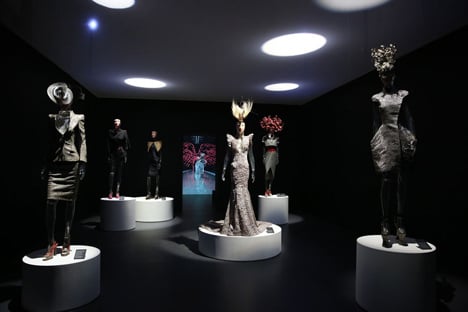
One of the display rooms in the exhibition containing outfits worn by Isabella Blow. Notice the moody low lighting, representing the sadness felt at her death, broken up by the spotlights highlighting Blow's exhibitionism and shining impact on the fashion world.

No comments:
Post a Comment